Thrive With the Field

We help people see the living systems they participate in, recognise what matters and strengthen how they work together.
THE CHALLENGE
What we do together depends on what we notice and can talk about
Every organisation is a Living Field. Its people, relationships, structures and wider environment continually shape one another.
It is also an Attention Economy. What receives attention, and what is overlooked, shapes what people can understand, discuss and act on together.
How we pay attention, relate, think, feel, communicate and respond shapes the results we create. These recurring patterns form the organisation’s Human Organisational Operating System: the everyday ways people make sense, decide, coordinate and learn together.
Our Human Organisational Operating System
Shared mental models and language help us notice and discuss the often invisible conditions shaping our work.
We can see the results we achieve more readily than the patterns of relating, communicating, deciding and coordinating that produce them.
The urgent can crowd out what matters most. When something breaks down, we may focus on the immediate problem and overlook the underlying conditions.
Making these patterns visible helps us understand how they shape our results and what becomes possible. It also helps us recognise our own contribution and decide what to strengthen or change.

At The Field, we help people make these patterns visible, recognise what matters and strengthen how they work together. Our approach develops in four connected stages.
BUILD A SHARED LANGUAGE
1. Meta-awareness and names for what we notice
Through ThriveTogether, we draw on research and practice in neuroscience, dialogue, systems thinking, psychology, organisational learning and collaboration. We translate these insights into research-informed distinctions, models and practices that are easy to remember and apply.
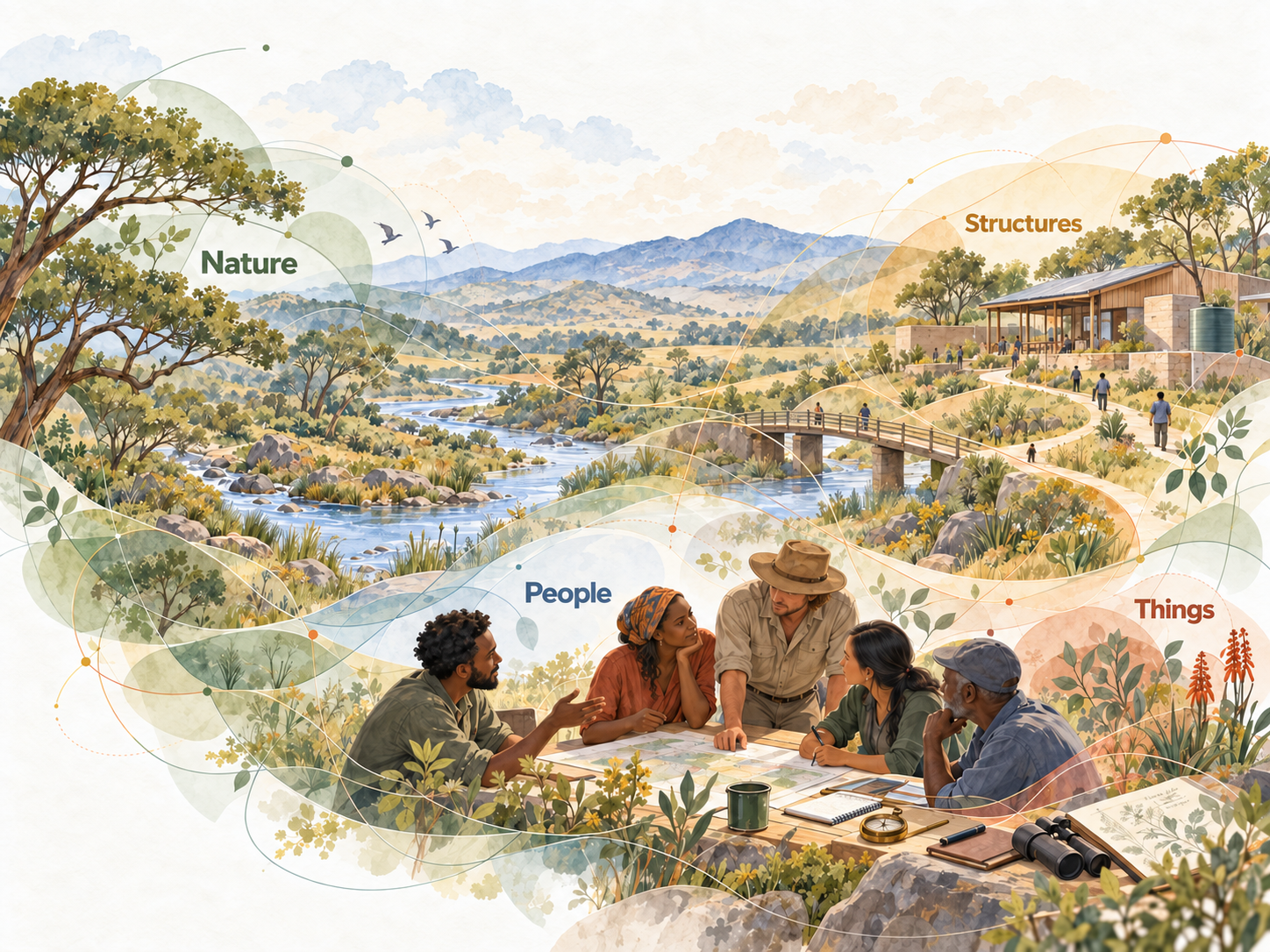
These give us language for patterns we might otherwise overlook. They help us develop awareness across four interconnected domains of The Field—the living human organisational system in which we work together:
- Eco-centric: recognising the wider conditions shaping our situation.
- Socio-centric: noticing what is happening between us.
- System-centric: seeing how the arrangements for work influence what happens.
- Ego-centric: recognising our feelings, assumptions, habits, choices and contributions.
Meta-awareness runs across all four. It means noticing where and how we are paying attention, and what we may be overlooking.
Shared language helps us bring these perspectives into dialogue, develop a fuller understanding of our situation and choose how to act together.
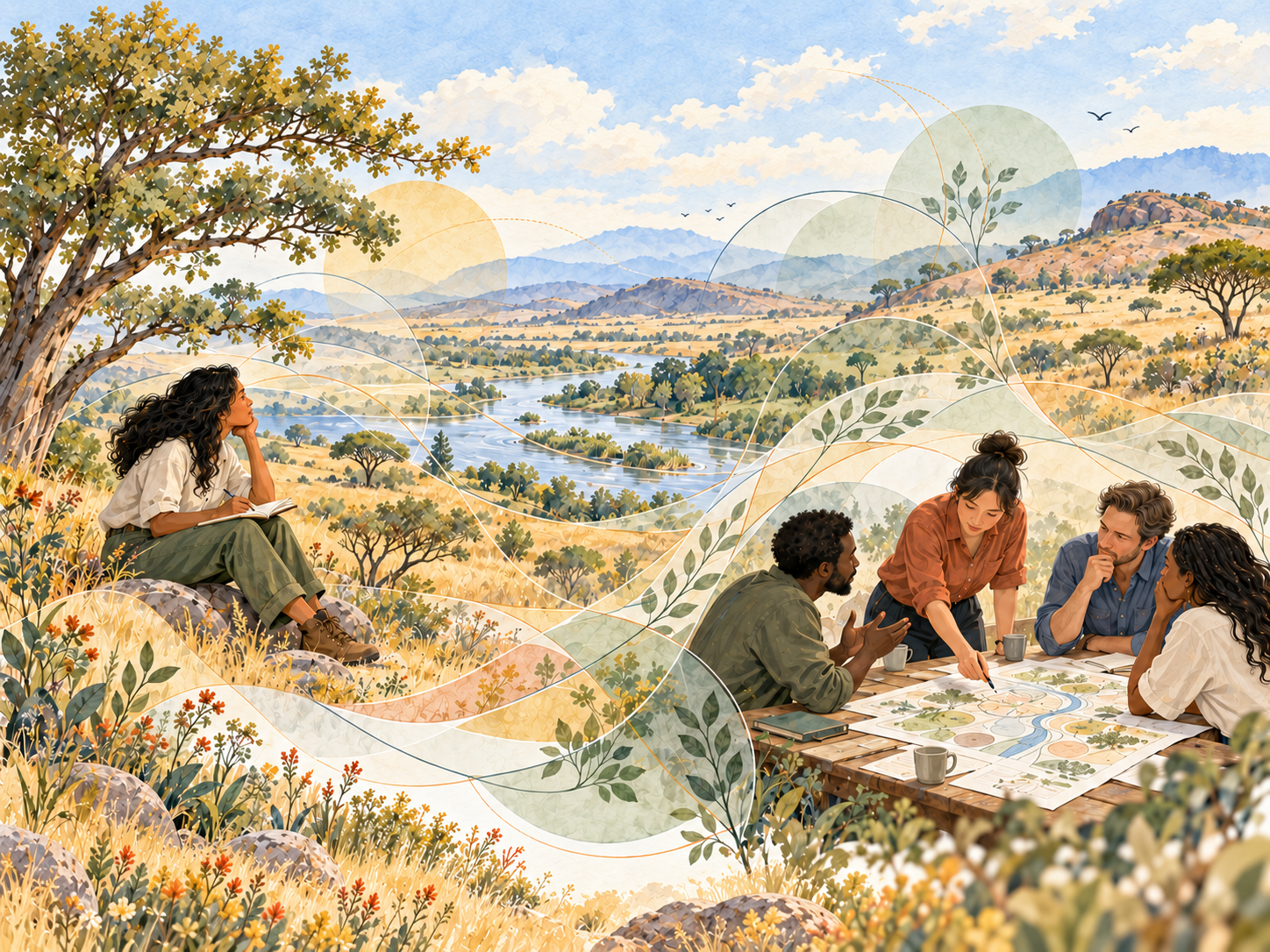
“We bring about a world in consciousness that is partly what is given, and partly what we bring, something that comes into being through this particular conjunction and no other. And the key to this is the kind of attention we pay to the world.” – Iain McGilchrist
SEE THE WHOLE
2. AIM across the living Field
As we become more aware of how we pay attention, we can deliberately broaden where we look.
Our Attention Integration Model helps us put this into practice by directing attention across four connected perspectives:
- Context and potential: What is happening around us? What matters, and what opportunities are emerging?
- Relationships and participation: How are we relating and working together?
- Intention and organisation: Do we share a clear intention, and do our structures support it?
- Action, results and learning: Are we following through on commitments and learning from what happens?
WHAT BECOMES VISIBLE
3. Notice where things do, and do not, fit together
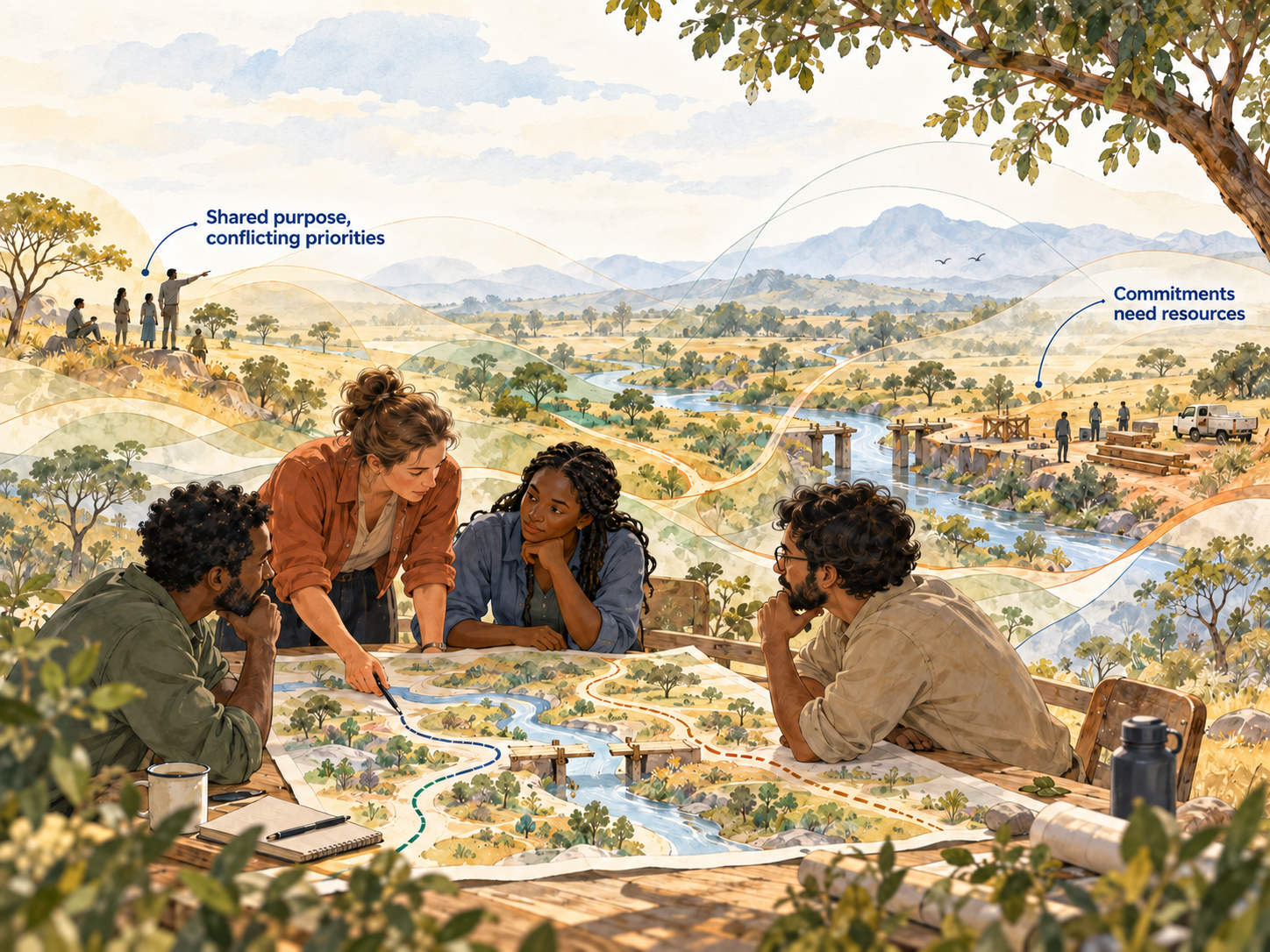
When results differ from expectations, explore what needs attention. Looking across the living Field helps us see how its parts influence one another and where they may be out of alignment.
When results differ from expectations, whether positively or negatively, we treat these breakdowns as opportunities to learn and evolve as rapidly as we can.
They invite us to explore the conditions behind the result and recognise where the system needs reinforcement, care or change.
PUT INSIGHT INTO PRACTICE
4. Shape the system together
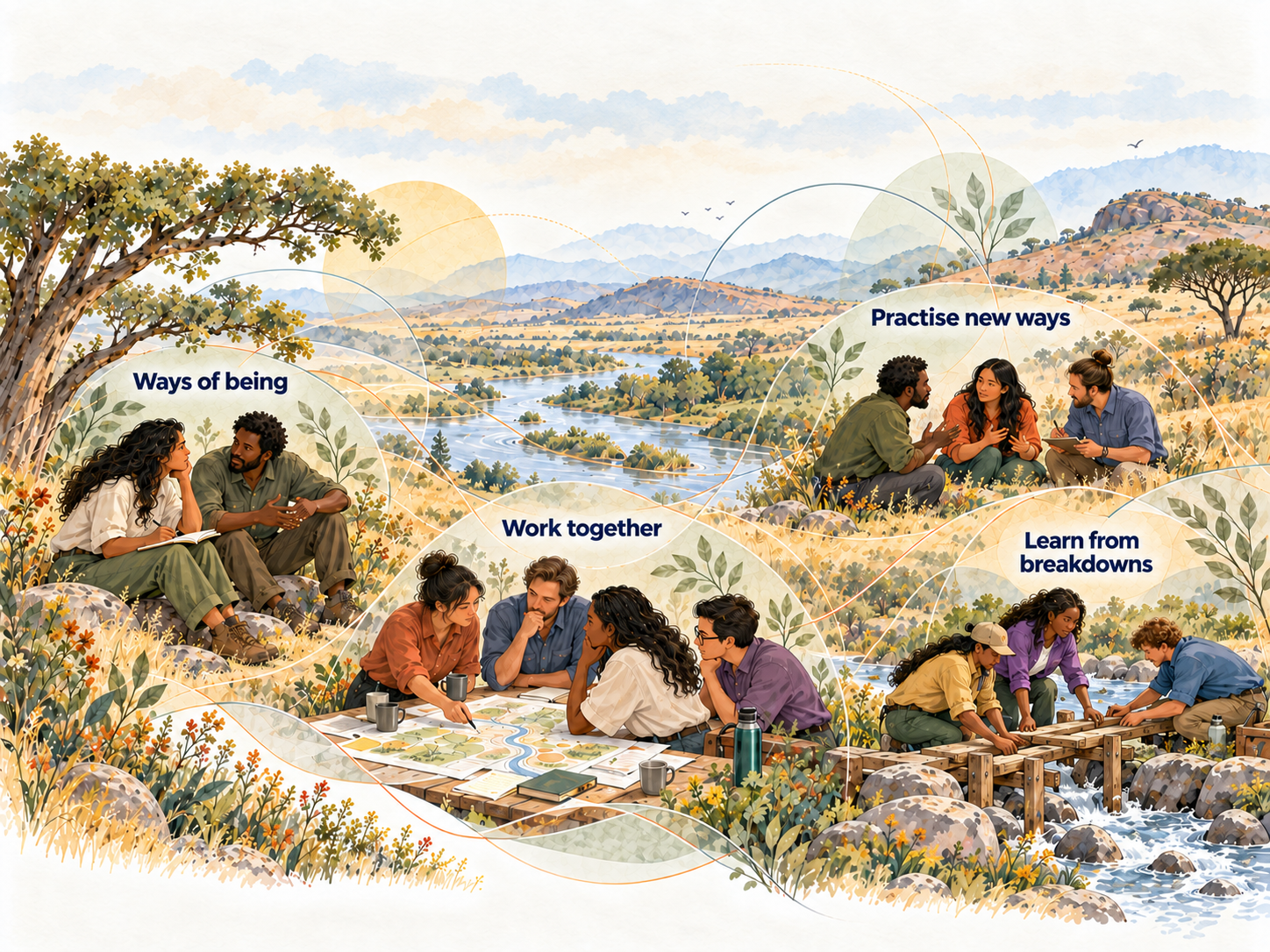
Once we can see how our living system is organised, we can participate in shaping it purposefully and collaboratively. This capacity develops through practice, in four connected ways:
- Work with our ways of being. We notice how emotions, assumptions and habits shape what we see and how we respond. Through self-regulation and co-regulation, we can stay present under pressure and help others do the same.
- Shape how we work together. Through intentional partnering, we attend to the relationships, roles, processes and agreements through which we organise our work.
- Practise new ways of working. We relate more skilfully, communicate clearly and make better use of one another’s strengths and different ways of attending, thinking and communicating. This supports clearer thinking, more dependable promises and reliable delivery.
- Learn from breakdowns. When results differ from expectations, we explore the thinking, structures and patterns behind the gap. Learning in the flow of work helps us make the technical and adaptive changes our circumstances require.
See. Tend. Learn. Adjust.
WHAT THIS MAKES POSSIBLE
Four conditions for working well together
As we explore what needs attention, four conditions help us recognise what to strengthen. Each supports the others, shaping our ability to understand the situation, work together and follow through.
- Clarity: A shared understanding of the context, purpose and what matters now.
- Connection: Enough trust and mutual regard to speak openly, think and act together.
- Coherence: Priorities, roles, resources, processes and decisions that support one another.
- Commitment: Promises we can own, fulfil and learn from.
Together, these conditions help us turn shared understanding into purposeful, coordinated action.

THE PRACTICE
Grounded in experience and practice
I am Rooken Podesta, a consultant, facilitator and mentor with more than 30 years of experience across diverse industries and communities.
My work integrates dialogic leadership, organisational development, systems thinking, communication, psychological safety and the practical realities of working with people.
I help people organise and integrate their attention, make sense of complexity together and develop practical ways of participating that enable more coherent action.

Every engagement begins with the situation, the people involved and the change that matters. A first conversation can help us understand what is happening and which form of support may be most useful.