Eight foundational capabilities

Practices for Thriving

Four attentions. Eight practices.

The Field Model identifies four places to look in any living human system. The eight ThriveTogether practices develop how people participate within and across them.
The four attentions show where to attend. The eight practices develop how to participate.
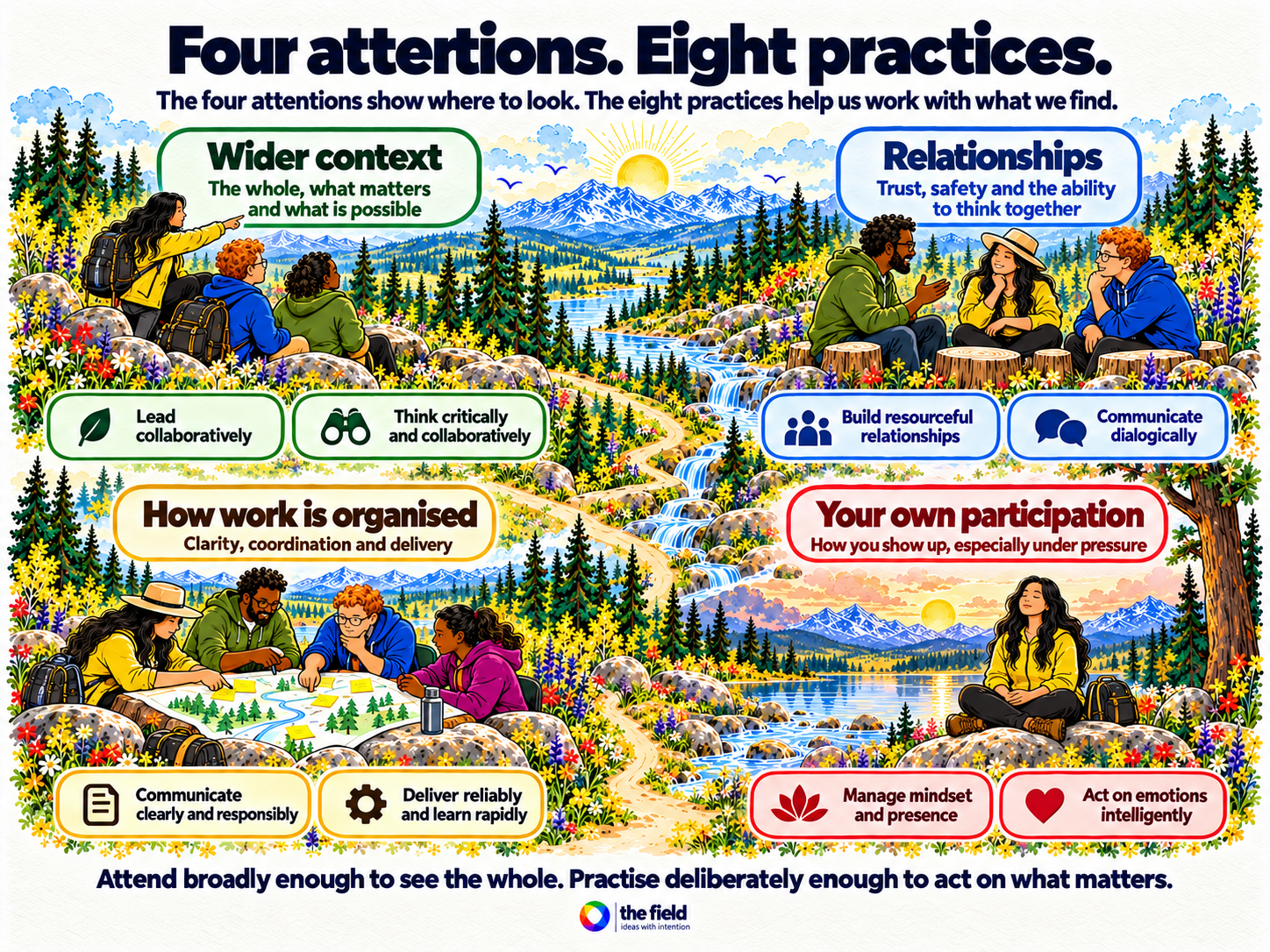
The four attentions and eight ThriveTogether practices across wider context, relationships, organisation and personal participation

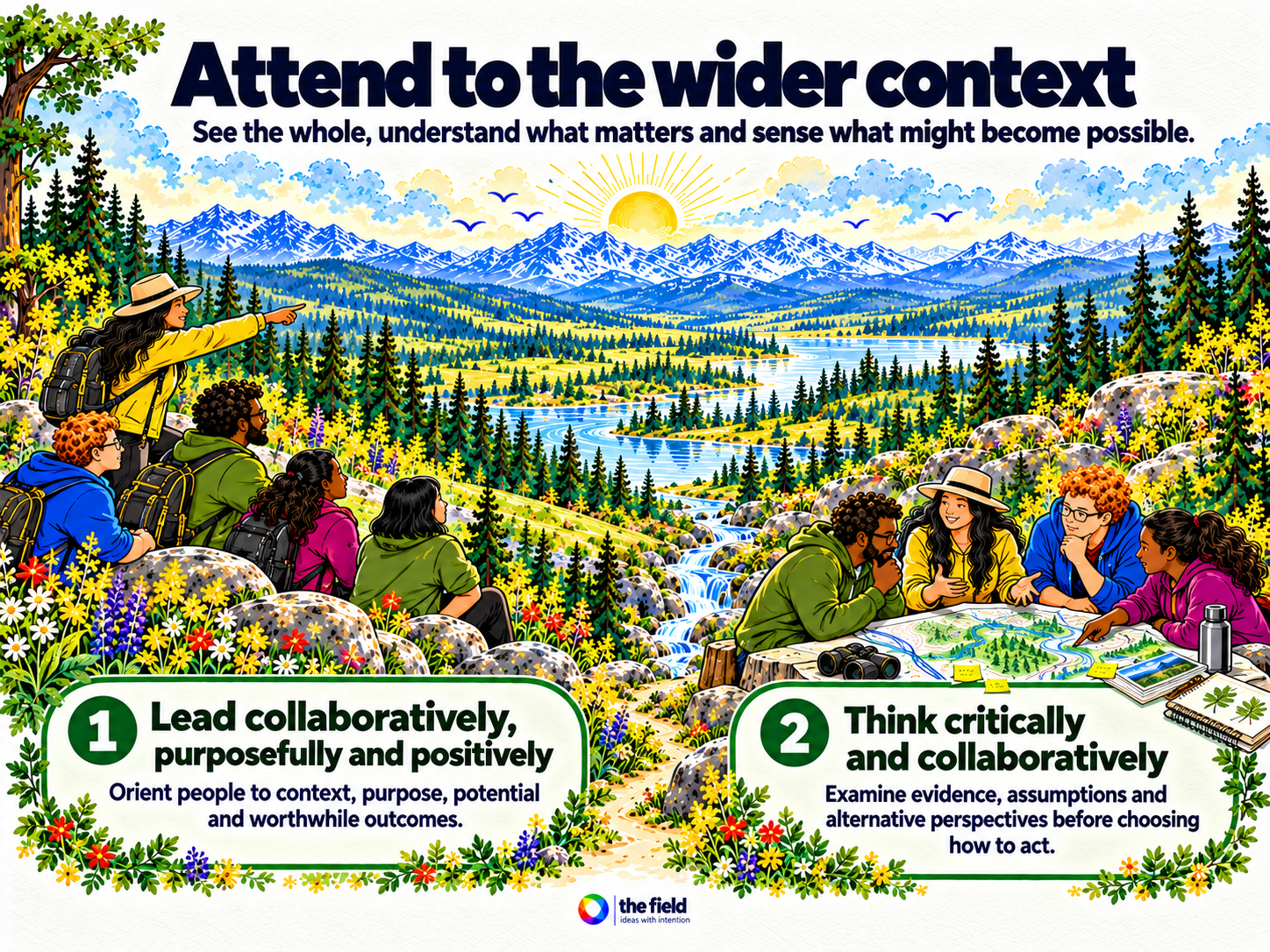
Attend to the wider context

See the whole, understand what matters and sense what might become possible.
  1. Lead collaboratively, purposefully and positively. Orient people to context, purpose, potential and worthwhile outcomes.
  2. Think critically and collaboratively. Examine evidence, assumptions and alternative perspectives before choosing how to act.
Attending to the wider context through collaborative leadership and critical thinking

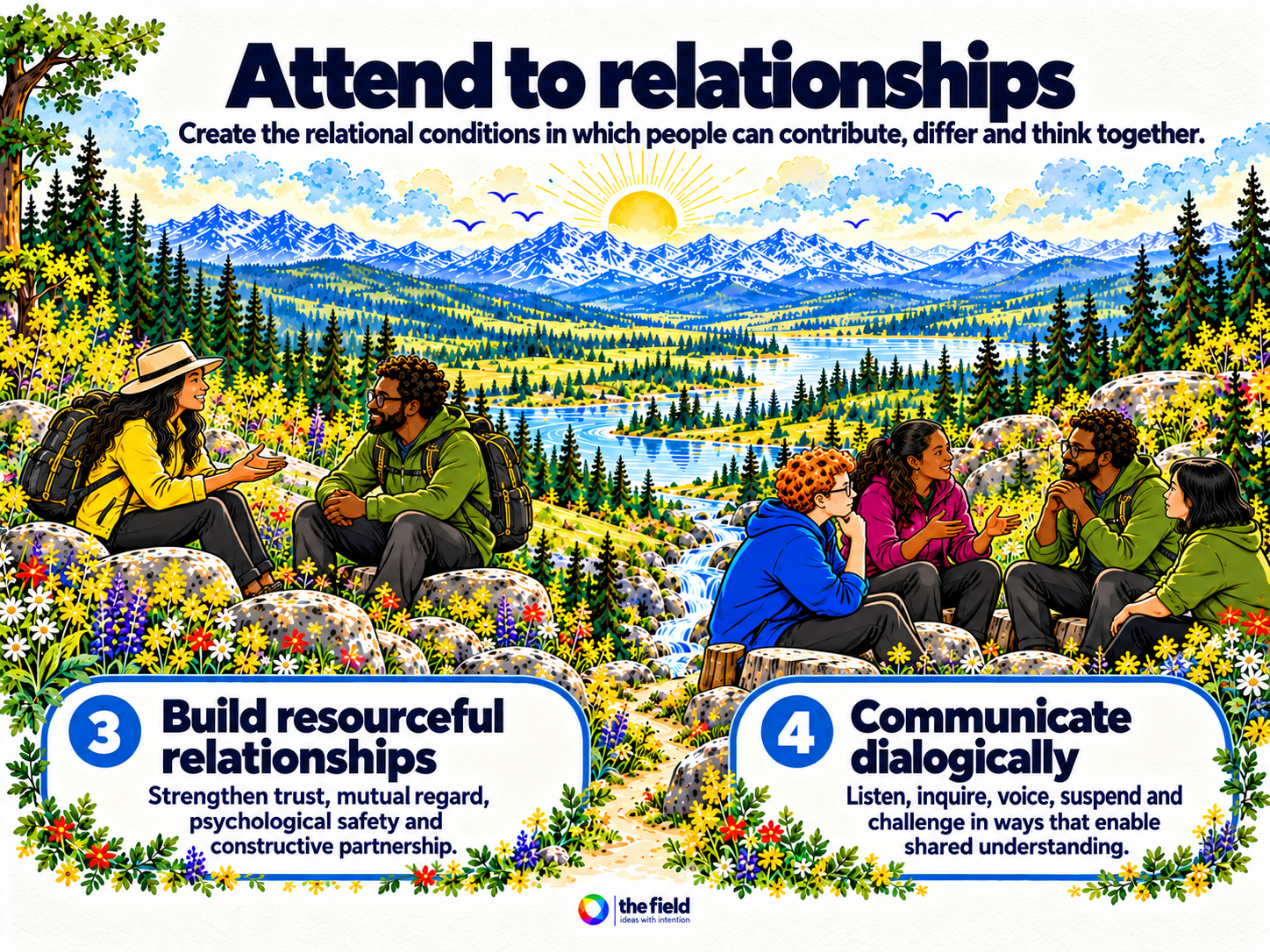
Attend to relationships

Create the relational conditions in which people can contribute, differ and think together.
  1. Build resourceful relationships. Strengthen trust, mutual regard, psychological safety and constructive partnership.
  2. Communicate dialogically. Listen, inquire, voice, suspend and challenge in ways that enable shared understanding.
Attend to relationships through trust, mutual regard, psychological safety and dialogic communication

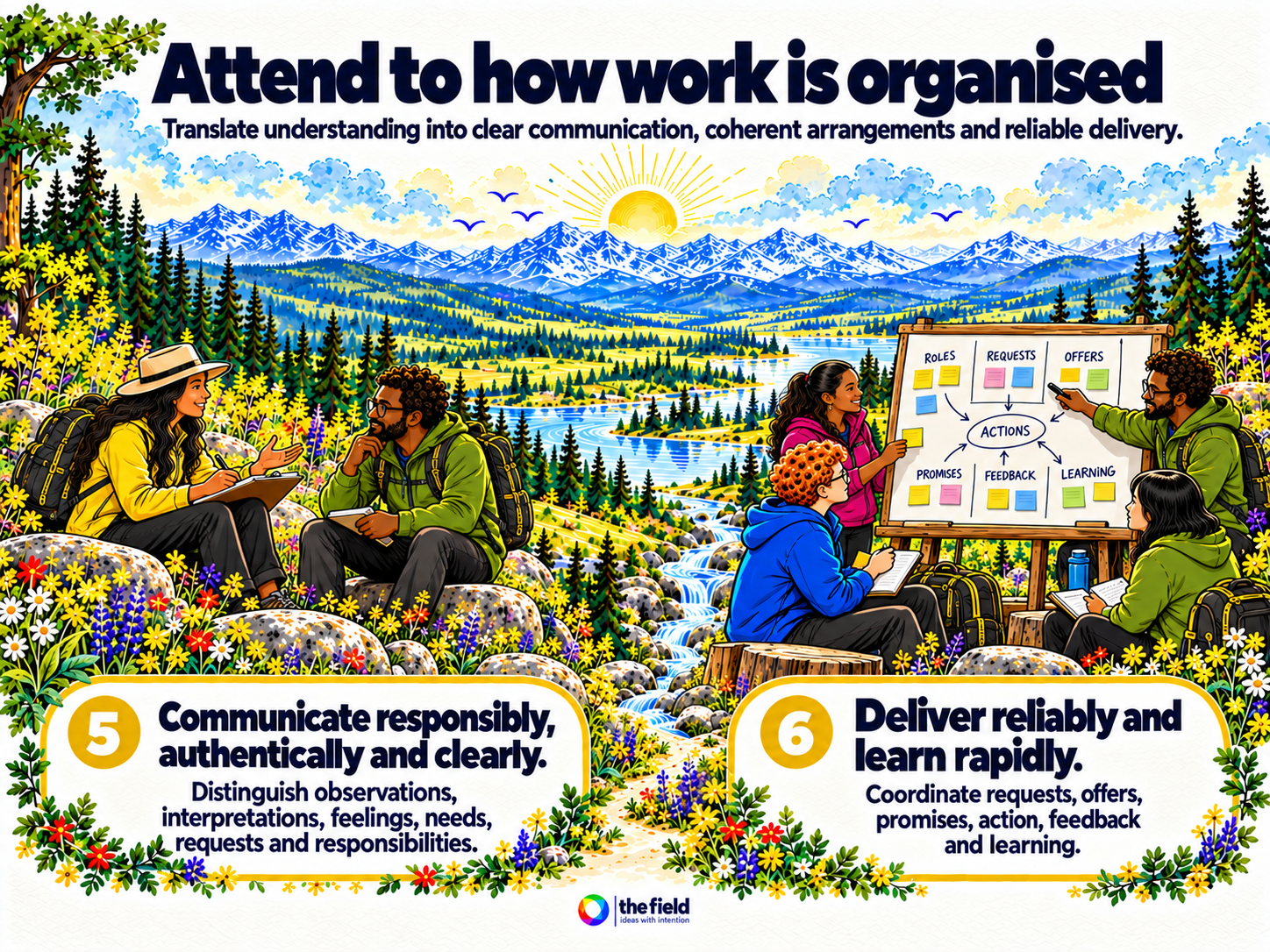
Attend to how work is organised

Translate understanding into clear communication, coherent arrangements and reliable delivery.
  1. Communicate responsibly, authentically and clearly. Distinguish observations, interpretations, feelings, needs, requests and responsibilities.
  2. Deliver reliably and learn rapidly. Coordinate requests, offers, promises, action, feedback and learning.
Attend to how work is organised through responsible communication and reliable delivery

Attend to your own participation

Notice and regulate how you are showing up, especially under pressure.
  1. Manage mindset and presence. Develop awareness, regulation, perspective and intentional participation.
  2. Act on emotions intelligently. Treat emotion as information, work constructively with needs and expand the choices available.

Tools are Heuristics

Tools serve us, not the other way around. The Field offers practical rules of thumb that help us direct our attention and notice what matters, without prescribing what we must think or do. Some ways of thinking help us see more of the Field. Our tools encourage us to attend broadly enough to understand the whole, then focus closely enough to act on what matters most.

We learn by putting it into practice

We call them practices because we get better at them by using them. Participants can put the tools to good use straight away, then grow more skilful and confident as they apply them in their everyday work. Workshops and conversations give us room to explore new ideas. Reflection, learning partners and feedback help us keep learning until these practices become a natural part of how we work together.

Which practice would make a difference now?

Begin with the challenge you are facing and the capability you want to strengthen.

Start a conversation